

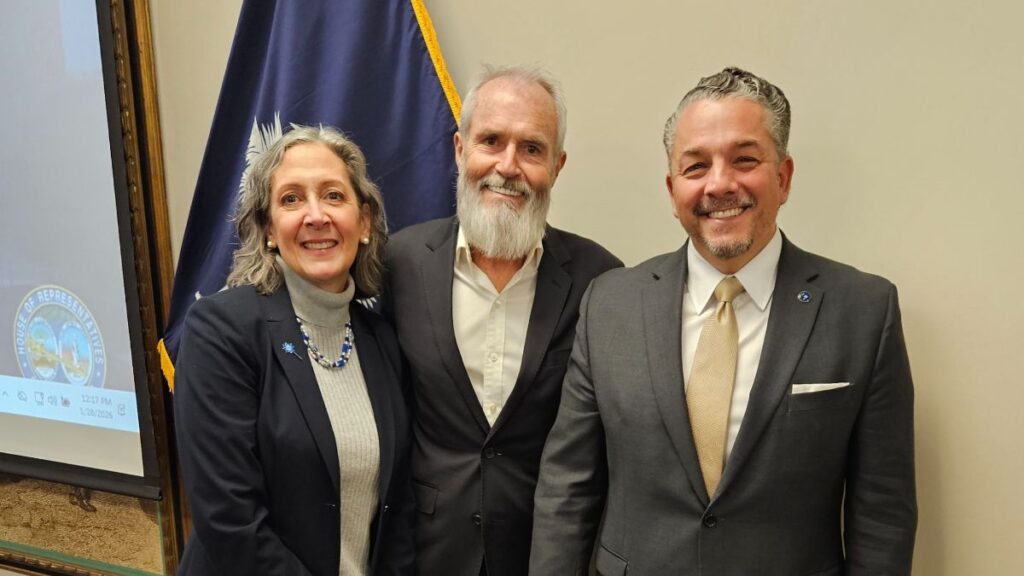
Jerry Milner, a lifelong social worker and national leader in child welfare reform, recently testified before the Senate Family Veterans’ Services Committee.
He previously served as Alabama’s child welfare director and led the U.S. Children’s Bureau at the Department of Health and Human Services from 2017 to 2021. Milner is a fierce advocate for shifting the nation’s approach from reactive child welfare intervention to proactive, community-based prevention and shared his perspectives.
In his testimony, Milner promoted that increasing community-based prevention to work in concert with child welfare is more effective, noting, “Balancing our attention with those intensive interventions and more upfront support is the most humane thing that we can do for our children and families.”
While affirming the critical role of government in protecting children from serious harm, Milner emphasized that many families currently involved in the system could have been supported earlier, before reaching crisis through accessible, preventive services. He acknowledged our current limitations. “Preventing families and kids from getting to the point where about the only intervention that they have available is our public child welfare system,” added Milner.
He noted that a majority of children in foster care are not removed because of physical or sexual abuse, but rather because of allegations of neglect, which often stem from poverty and a lack of resources. He also reminded us that mandatory reporters often have no option but to call a child abuse hotline, leading to millions of reports each year that overwhelm systems and fail to address root causes. Without early support, families cycle through repeated reports until the situation deteriorates.
Drawing from his decades of field experience, Milner underscored the importance of listening to families and youth, noting that their insights have shaped his understanding more than formal education or policy manuals. Milner shared, “Hearing those voices has impacted me far more than the three degrees I earned along the way.”
He congratulated South Carolina on being a national example of effective prevention and noted the home-visiting programs supported by the Children’s Trust. Milner, who spent time with South Carolina families enrolled in the home visiting program during a previous visit to the state, shared that he found young families with significant risk factors thriving because of consistent, relationship-based support. “Not a one of those kids was in foster care…somebody took the time, the effort, the interest to invest in them through a home visiting program.”
Despite these successes, Milner warned that current prevention programs reach only a fraction, 10%, of families in need. He urged South Carolina to build on its strong foundation by expanding investments in home visiting and family resource centers.
Milner, through his current work with the Family Justice Group, publishes a peer-reviewed journal that recently highlighted the Children’s Place in Aiken as a thriving organization meeting a crucial community need.
Milner cited compelling evidence that prevention delivers significant returns on investment while avoiding long-term costs associated with trauma, mental health needs, and involvement with juvenile and adult justice systems. He concluded that a balanced system offers both a humane and fiscally responsible path forward, one that reserves intrusive interventions for when they are truly necessary while strengthening families upstream.
Milner closed by highlighting our opportunity in South Carolina. “You in South Carolina have the foundation that a lot of states, quite honestly, would be very envious of. You have a Children’s Trust Fund here that exceeds so much of the work that we see. I’m here to encourage you to build on that, to take advantage of the lessons that we’ve learned about supporting families and build what I think could be a nationally exemplary system—where we’ve balanced out prevention with the need for more intense intervention.”