
Positive Childhood Experiences
Positive childhood experiences (PCEs) are the foundation for healthy development and lifelong well-being.
These experiences include having strong, supportive relationships with parents, caregivers, and peers; feeling safe at home, in school, and in the community; and having opportunities to learn, grow, and play in nurturing environments. Just as negative experiences can create long-term challenges, positive experiences can strengthen resilience and help children thrive.
Research shows that PCEs buffer the effects of stress and adversity, supporting mental and physical health throughout a child’s life. Children who feel loved, valued and supported are more likely to develop confidence, build strong social connections, and succeed in school and beyond. These experiences lay the groundwork for emotional regulation, problem-solving skills and a hopeful outlook.
By fostering positive experiences in everyday interactions, families, schools, and communities can make a lasting difference. Every small moment of connection adds up, helping children grow into healthy, resilient adults who can pass those strengths on to the next generation.

Examples of Positive Childhood Experiences
Feeling safe and protected by an adult in the home
Family stood by during difficult times
Sense of belonging in high school
Supported by friends
Able to talk about feelings
Enjoyment when participating in community traditions and activities
Two or more nonparent adults took a genuine interest in them
Research and Data

Positive Childhood Experiences in South Carolina
Children, despite experiencing ACEs, can also experience many positive things.
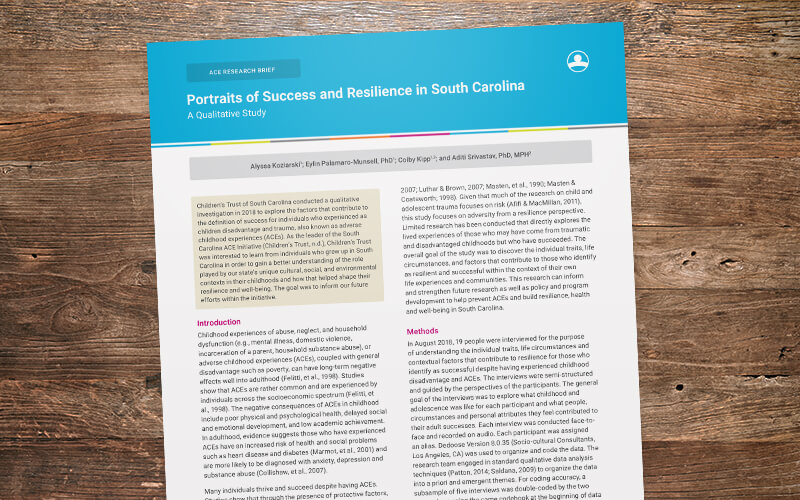
Portraits of Success and Resilience in South Carolina, A Qualitative Study
A qualitative study examining how people in South Carolina who had experienced a lot of childhood adversity were able to be resilient and successful in their life.
Portraits of Success and Resilience in South Carolina (PDF) ›